
The Difference Between Traditional Video Editing and AI-Assisted Video Production
Key Takeaways
- Traditional video editing relies heavily on manual creative and technical processes.
- AI-assisted video production automates many repetitive tasks while still requiring human oversight.
- The two approaches differ in workflow, production speed, creative control, and skill requirements.
- AI tools can improve efficiency but do not eliminate the need for planning, storytelling, and quality assurance.
- Learning both conventional editing techniques and AI workflows through an AI video course or relevant WSQ courses can help professionals adapt to changing industry practices.
Introduction
Video production has evolved significantly with the introduction of artificial intelligence. Traditional editing methods remain widely used across film, television, advertising, and corporate communications, while AI-powered platforms now automate tasks that previously required considerable manual effort. As more professionals explore an AI video course to understand these emerging technologies, it becomes increasingly important to recognise how AI fits alongside conventional editing practices. Instead of replacing traditional editing altogether, AI has introduced an alternative workflow that focuses on efficiency, automation, and faster content creation. Understanding the differences between these two approaches helps businesses, marketing teams, and aspiring content creators choose suitable production methods based on project goals, available resources, and quality requirements.
Difference in Production Workflow
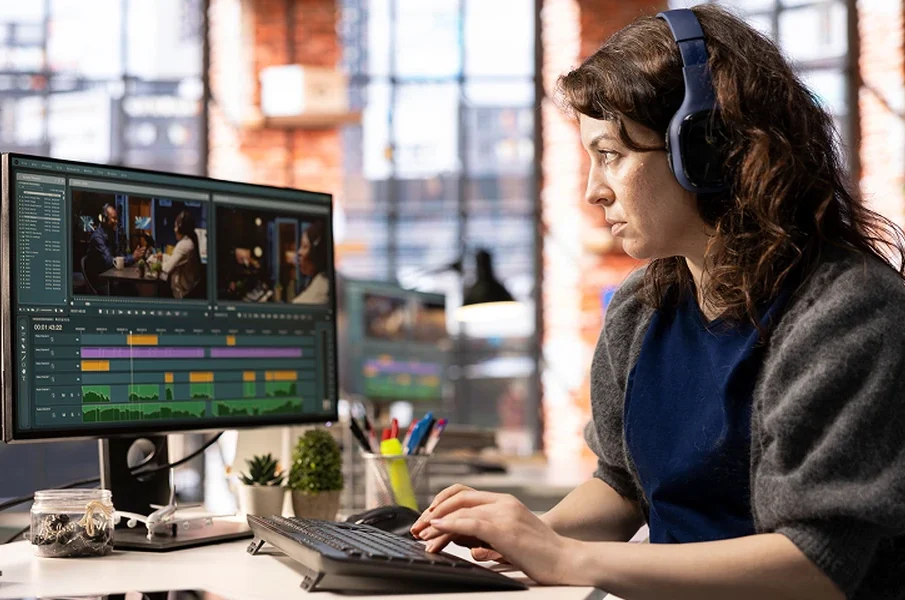
Traditional video editing follows a structured process that begins with planning, filming, importing footage, organising media, editing sequences, colour correction, sound mixing, and exporting the final product. Editors manually review every clip, determine the best takes, trim footage, adjust transitions, synchronise audio, and refine pacing throughout the project. Every creative decision depends on the editor’s technical knowledge and judgement, making the process highly detailed but also time-consuming.
AI-assisted video production changes this workflow by automating many repetitive stages. Modern AI platforms can generate scripts, create voiceovers, produce avatars, recommend scene layouts, remove background noise, generate subtitles, and assemble draft videos from text prompts or templates. Editors remain involved, but much of their work shifts from manually building videos to reviewing, refining, and customising AI-generated content. This shorter workflow enables organisations to produce straightforward videos more efficiently while maintaining consistent output.
Difference in Speed and Efficiency
One of the most noticeable differences between traditional editing and AI-assisted production is the time required to complete a project. Conventional editing often involves many hours of reviewing footage, making frame-by-frame adjustments, synchronising audio, and rendering multiple revisions. Large projects may require collaboration between editors, motion graphic designers, sound engineers, and producers before delivery.
AI-assisted production significantly reduces the time needed for routine tasks. Automated subtitle generation, scene recommendations, text-to-video creation, and AI-generated narration allow editors to complete certain projects much faster. This efficiency is particularly useful for training videos, internal communications, marketing explainers, and social media content where production speed is often a priority. However, faster production should not be confused with complete automation, as human review remains necessary to identify inaccuracies, awkward transitions, or contextual errors.
Difference in Creative Control
Traditional editing offers complete creative flexibility because every aspect of the video is manually controlled. Editors determine camera sequencing, emotional pacing, visual effects, sound design, and storytelling techniques without relying on automated suggestions. This level of control is especially valuable for documentaries, cinematic productions, television programmes, and projects where artistic direction is central to the final result.
AI-assisted production provides creative support rather than complete creative independence. While AI can recommend layouts, generate visuals, or suggest editing decisions, these recommendations depend on existing algorithms and training data. Users often work within predefined templates or automated structures before making manual adjustments. As a result, AI can accelerate production but may require additional editing to achieve highly customised or distinctive visual styles.
Difference in Skills and Professional Development
Traditional editing requires extensive knowledge of editing software, colour grading, audio engineering, storytelling, visual composition, and production planning. Developing these skills often takes years of practical experience across different project types and production environments.
AI-assisted production introduces additional competencies focused on prompt writing, AI tool selection, workflow optimisation, automated content review, and quality assurance. Professionals increasingly benefit from understanding both conventional editing techniques and AI technologies rather than specialising in only one approach. An AI video course can help learners understand how automation fits into modern production workflows, while relevant WSQ courses in Singapore provide structured opportunities to build practical digital media and workplace skills aligned with current industry practices.
Conclusion
Traditional video editing and AI-assisted video production serve different purposes rather than competing directly with one another. Conventional editing provides greater creative precision and flexibility, whereas AI-assisted workflows improve efficiency by automating repetitive production tasks. The most effective approach depends on the project’s objectives, required quality, available resources, and production timeline. As AI technology continues to evolve, professionals who understand both traditional editing principles and AI-assisted workflows will be better prepared to adapt to changing industry expectations.
Visit OOm Institute and build practical skills in modern video creation.